
Social casinos are not harmless entertainment. They are a $6.2 billion industry that teaches players to crave the mechanics of gambling, then points them toward the real thing when their virtual wallets run dry. The same dopamine loops, near-misses, and leaderboard anxiety exist without the regulatory guardrails that licensed operators must follow. By the time a player graduates from virtual coins to actual deposits, they have already been conditioned to chase losses, buy bundles, and treat every spin as progress toward something meaningful.
The industry understands this pipeline. Social iGaming revenue hit $6.2 billion in 2020 and is tracking toward $7.5 billion by 2026, growing at roughly 8.1% annually. Those numbers do not come from casual dabbling; they come from players who have learned to spend.
How the freemium trap actually works
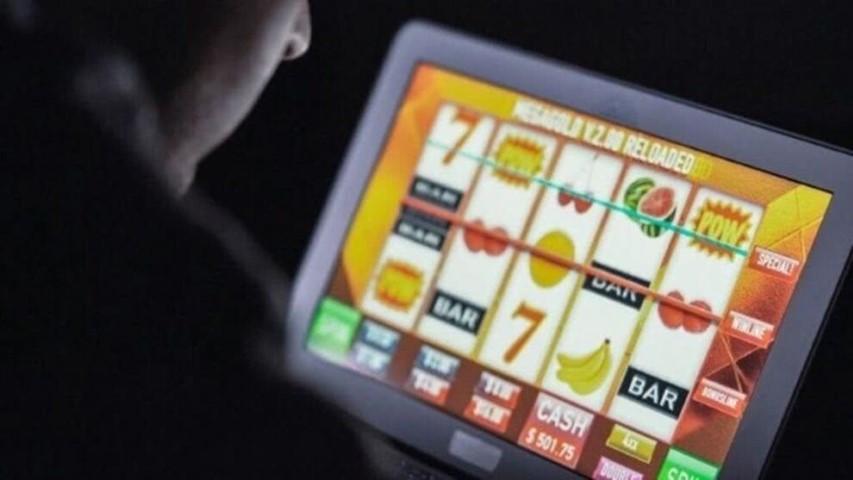
A social casino looks identical to a real one. The slots spin the same way. The poker tables use the same hand rankings. The sound design, animations, and VIP progression systems all mirror what players find at licensed sites like Casino Online. The only material difference is the currency. Virtual chips cannot be cashed out, which means the platform needs no gambling license and faces none of the scrutiny around responsible gaming, payout verification, or self-exclusion that regulators impose on real-money operators.
This legal gap is the entire business model. Social casinos operate in markets where traditional gambling is restricted or heavily regulated, building player bases that real-money brands cannot touch directly. The freemium structure, free entry with optional purchases, removes the psychological barrier of financial risk while preserving every other pressure point. Daily login bonuses, friend invite rewards, challenge completions, and free spin cycles create a rhythm of engagement that feels like loyalty but functions like habit formation.
Players earn virtual currency through these mechanisms, then burn through it faster than the free refills allow. At that point the purchase screen appears with the same urgency as a deposit prompt at a real casino. Bundles are priced to encourage larger buys. Limited-time offers flash countdown timers. Subscription services promise monthly virtual currency drops and ad-free play, converting sporadic spenders into recurring revenue. The spending is voluntary in name only; the design ensures it does not feel that way.
The social engineering beneath the social features
The “social” in social casino is not incidental. Early platforms like Zynga Poker and Slotomania proved that leaderboards, friend invites, and in-game chat could drive retention far more effectively than game quality alone. Modern platforms have refined this into something closer to behavioral architecture. Live multiplayer modes, real-time tournaments, and cooperative quests give players shared objectives that bind them to the platform through obligation to others. Achievement posting to external social networks turns every virtual win into performative content, recruiting new players through the same social proof mechanisms that made FarmVille ubiquitous in the late 2000s.
The psychological hooks are explicit. Players report starting to relieve stress or boredom, but the platforms are designed to escalate need rather than satisfy it. The community becomes the reason to return. The competition becomes the reason to spend. The progression systems, levels, ranks, and unlockable content create an illusion of skill development that masks the underlying randomness. A player who believes their leaderboard position reflects ability will approach real-money play with dangerous self-assurance.
What operators gain from players who never win real money
For real-money casino operators, social platforms function as a pre-qualified lead pool with built-in behavioral data. Every spin, purchase, and social interaction generates a profile. Player preferences, spending triggers, session patterns, and engagement drop-off points are all trackable. This data feeds cross-promotion strategies that can target individuals with precision no traditional marketing channel allows.
The funnel operates in both directions. Some social platforms are owned by or partnered with real-money operators, creating a direct path from virtual to actual wagering. Others remain independent but sell access to their user bases. Either way, the player who has spent two years buying virtual currency bundles and chasing tournament rankings has been primed to accept similar mechanics with real stakes. The transition is not marketed as gambling; it is marketed as the natural next step in an entertainment journey the player has already invested in.
Platforms like Spin Casino illustrate how the social and real-money ecosystems now overlap, with free-to-play social offerings sitting alongside or feeding into deposit-based play. The boundary between practice and real wagering has become deliberately porous.
The habits that follow players across the divide
The conditioning is specific and transferable. Social casino players become accustomed to rapid play cycles, with auto-spin features and compressed session lengths that maximize exposure to reward schedules. They learn to evaluate games by visual appeal and bonus frequency rather than return-to-player percentages or house edge, metrics that social platforms never disclose because they are not required to. They develop spending patterns, small frequent purchases rather than large single deposits, that real-money operators now replicate through micro-transaction deposit structures.
Most critically, they normalize the emotional architecture of gambling without experiencing its financial consequences. The frustration of a losing streak, the compulsion to continue until a bonus triggers, the rationalization that the next purchase will change the outcome, all of these responses are cultivated in an environment where the worst outcome is a depleted virtual balance. When the same player encounters identical stimuli with actual money at stake, the emotional responses are already installed. The only new element is the loss.
The regulatory vacuum and its costs
Social casinos generally avoid gambling licensing because no real money changes hands on the platform itself. This exemption has allowed explosive growth but creates significant gaps in player protection. Self-exclusion tools, deposit limits, reality checks, and payout transparency, all standard requirements for licensed operators, are typically absent or optional in social gaming. Some jurisdictions have begun imposing disclosure requirements or responsible gaming mandates, but enforcement is inconsistent and the baseline remains far below what real-money regulation demands.
For players, this means the environment that shapes their habits is also the environment least equipped to recognize or intervene when those habits become problematic. The same progression systems that drive engagement can mask escalating time and money investment. The social features that build community can also build pressure to maintain appearances through continued spending. The absence of real-money stakes, paradoxically, can delay recognition that a pattern has become harmful, because the losses feel intangible until they are not.
The industry projects continued growth at 8.1% annually, with platforms exploring augmented and virtual reality to deepen immersion. SpinArena.net, currently Europe’s largest social casino by slot volume, already deploys AI-assisted game selection to match players with titles optimized to their engagement patterns. These innovations will not reduce the pipeline to real-money play; they will make it more efficient.